
✅Amazon's Zero Fee Comeback
BlissClub's Numbers, BCG's ecommerce report, Bubble Me's Funding
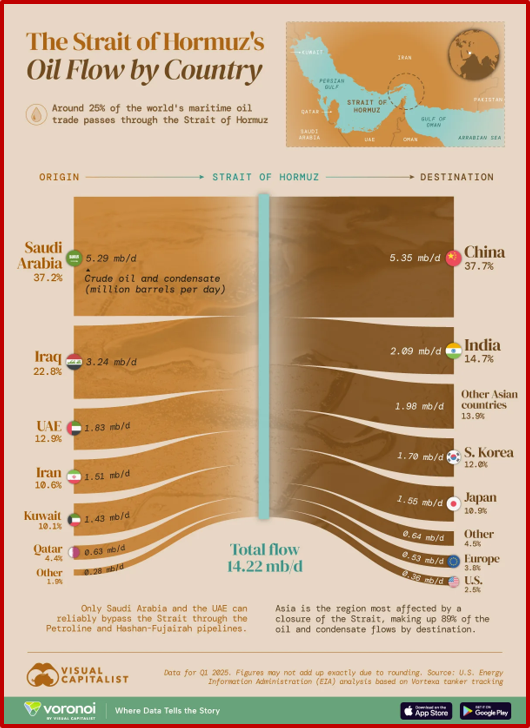
Somewhere between Iran and Oman, 14.22 million barrels of oil pass through a gap so narrow it makes your darkest logistics nightmare look spacious. India takes 2.09 million of those barrels daily - 14.7% of one of the world’s most fragile supply arteries.
Most D2C founders won’t think about the Strait of Hormuz until a conflict sends crude spiking, freight costs follow, and Q3 margin projections quietly break. The world’s messiest geography sits upstream of every Indian brand’s P&L.
We can’t control what happens at the Strait. We can control how prepared we are when it matters. Here’s what moved in Indian D2C this week.
🗞️Marketplace Buzz
Nykaa leads India’s $27 billion BPC market with 75% of online buyers preferring it, but quick commerce scaling from 14% to 30% of online BPC by 2030 is the channel Nykaa is chasing from behind. Blinkit and Zepto built beauty replenishment habits before Nykaa Now found its footing. The platform that owns discovery now has to earn a second loyalty, it was never designed to hold.
Inamo raising $8 million for dark store infrastructure looks like a logistics bet, but the quick commerce enablement startup’s round signals that India’s quick commerce wealth will accumulate with whoever controls the physical layer underneath the brand and platform wars. D2C brands and platforms compete endlessly for the consumer shelf position and attention, while Inamo competes for dependency.
FirstClub doubling to $250 million on a pending $50-60 million raise in six months looks like investors rewarding quick commerce execution, but India’s premium grocery segment has no dominant digital-first category owner and that structural vacancy is doing the valuation work. The operating model is still being proven at scale. India’s unoccupied premium retail position is the fundable consumer thesis right now. Who thought it would happen with offline premium grocery retailers still in the red?
Amazon India eliminating referral fees on sub-₹1,000 products across 125 million SKUs looks like small-seller support, but zero-commission access across that price band is a direct strike at the margin model keeping India’s growing seller class loyal to Meesho and Flipkart. Amazon is pricing itself into the position it should have occupied a long time back.
Rozana crossing 1 million active rural households across 21,000 Gangetic villages on a ₹290 crore Series B looks like rural FMCG arriving, but the platform’s 35,000 embedded women partners as last-mile agents prove that India’s $2 trillion rural market runs on community architecture logistics that platforms cannot replicate. Rural India spends ₹20,000 per household monthly.
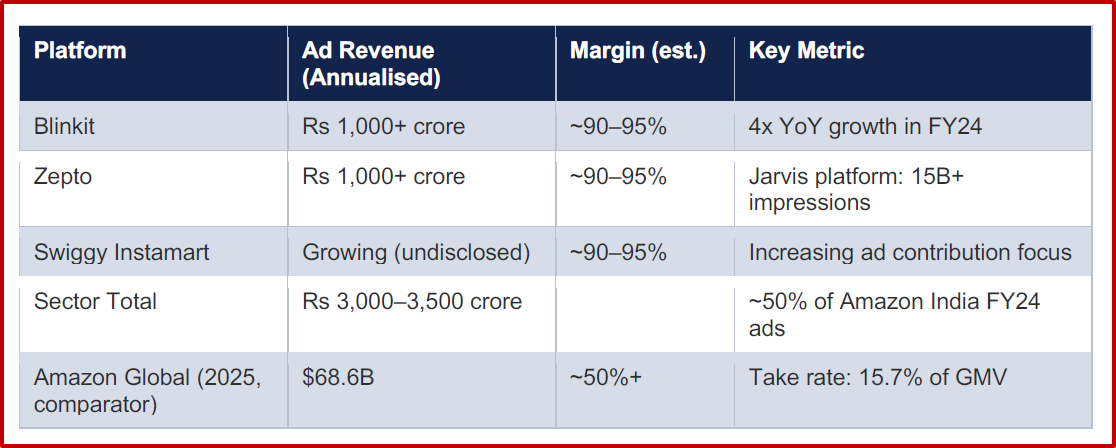
Blinkit and Zepto Are Already Running India’s Most Profitable Advertising Business, each hitting ₹1,000 crore in annualised ad revenue while the sector bleeds at P&L level. This analysis confirms that quick commerce’s actual business model is retail media, not delivery. Ad revenue runs at 90-95% margin as more and more D2C brands are routing 60-70% of marketing spend away from Meta and Google.
📊Infographica

🍕D2C Snippets
RAS Beauty taking ₹60 crore from Dabur Ventures with omnichannel expansion as primary fund use is a structural signal that farm-to-face luxury skincare hits a ceiling that clean positioning and strong cohorts cannot break alone. Digital-first luxury skincare can build velocity, but reaching ₹500 crore requires legacy channel access that D2C economics alone cannot fund. The ceiling is ‘distribution’. Every Indian D2C founder scaling past ₹100 crore will face the same call sometime.
Sirona’s revenue falling 23% to ₹77 crore in FY25 looks like ownership-transition collateral, but the feminine hygiene brand’s real loss was twelve months of hard-won category momentum surrendered to a roll-up that couldn’t operate focused D2C brands. Now that the founders are back in full control, its only a matter of time before the real batsmen build up a big score again.
BlissClub hit Rs 131.5 Cr in revenue in FY25, up 51% year on year, and cut losses by a very impressive 55% to Rs 20 crore. The secret sauce? A 42% slash in employee costs while revenue kept climbing. Revenue has grown 8x from Rs 15 crore in FY22, and at Rs 1.18 spent per rupee earned, breakeven is starting to feel like a real conversation. In a category crowded with Decathlon, HRX, and Cultsport, BlissClub is quietly doing what most D2C brands talk about but rarely pull off - growing fast and getting leaner at the same time.
Bubble Me raising ₹1.5 crore pre-seed on a single-ingredient magnesium platform is how India’s next ingredient-led consumer category gets quietly defined before well-funded D2C brands notice the gap. The magnesium-focused brand’s conviction mirrors exactly what Minimalist did with niacinamide and mCaffeine did with coffee- both built category leadership from the same stage of early, obsessive focus.
Supertails hit ₹108 crore at 68% growth in FY25, and the number that matters sits below that headline. The petcare startup’s -48.9% EBITDA and ₹52.5 crore in losses confirm a category still running on discovery spend ahead of proven repeat purchase loyalty. Pet parent demand across India’s urban metros is real and accelerating. Loyalty is the missing piece. Supertails is spending its way to the proof of concept.


📢Power Talk
“Digital brands are able to innovate much faster and offer products that are otherwise notavailable in the market. If you launch 10 products and seven don’t work, it’s okay; as long as a few become superstars, that is enough for a digital brand to grow into a large company,” Anurag Kedia, Co-founder, Pilgrim
📚Reads and Recommendations
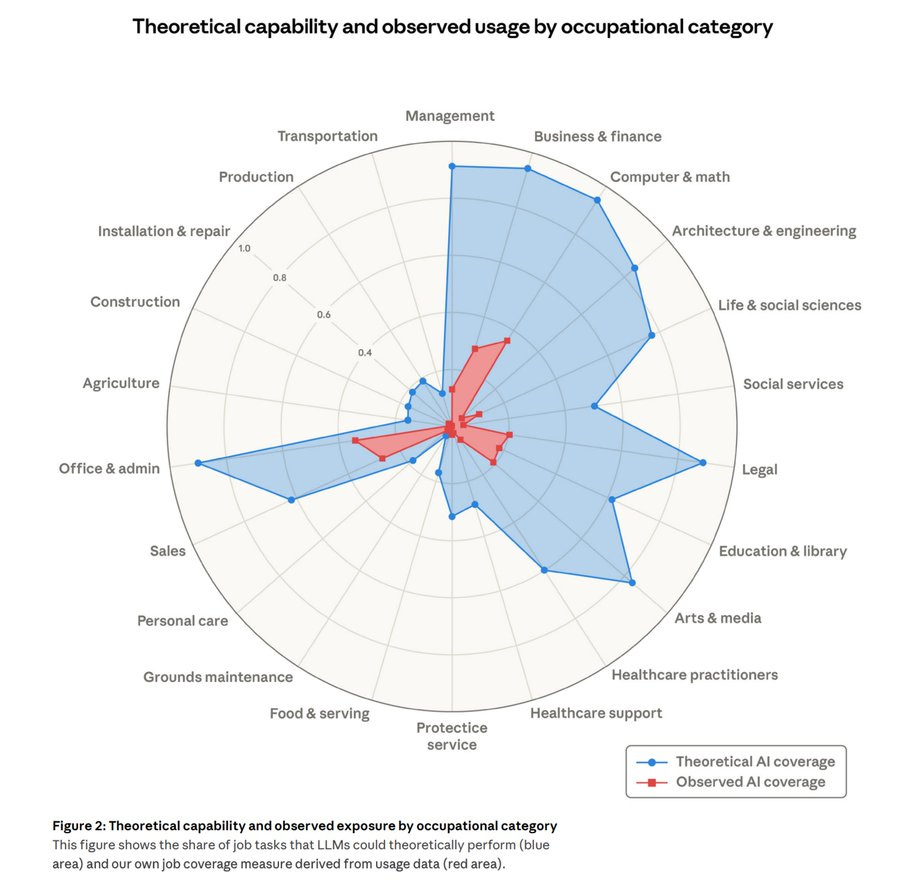
Anthropic’s labour market study shows AI theoretically covering 80% of tasks in business and finance functions, but observed usage sitting at a fraction of that- is the most underpriced signal for Indian D2C operators right now. The capability exists. Adoption doesn’t. Every founder who closes that gap before the market normalises compounds on a structural advantage that disappears the moment everyone else catches up.
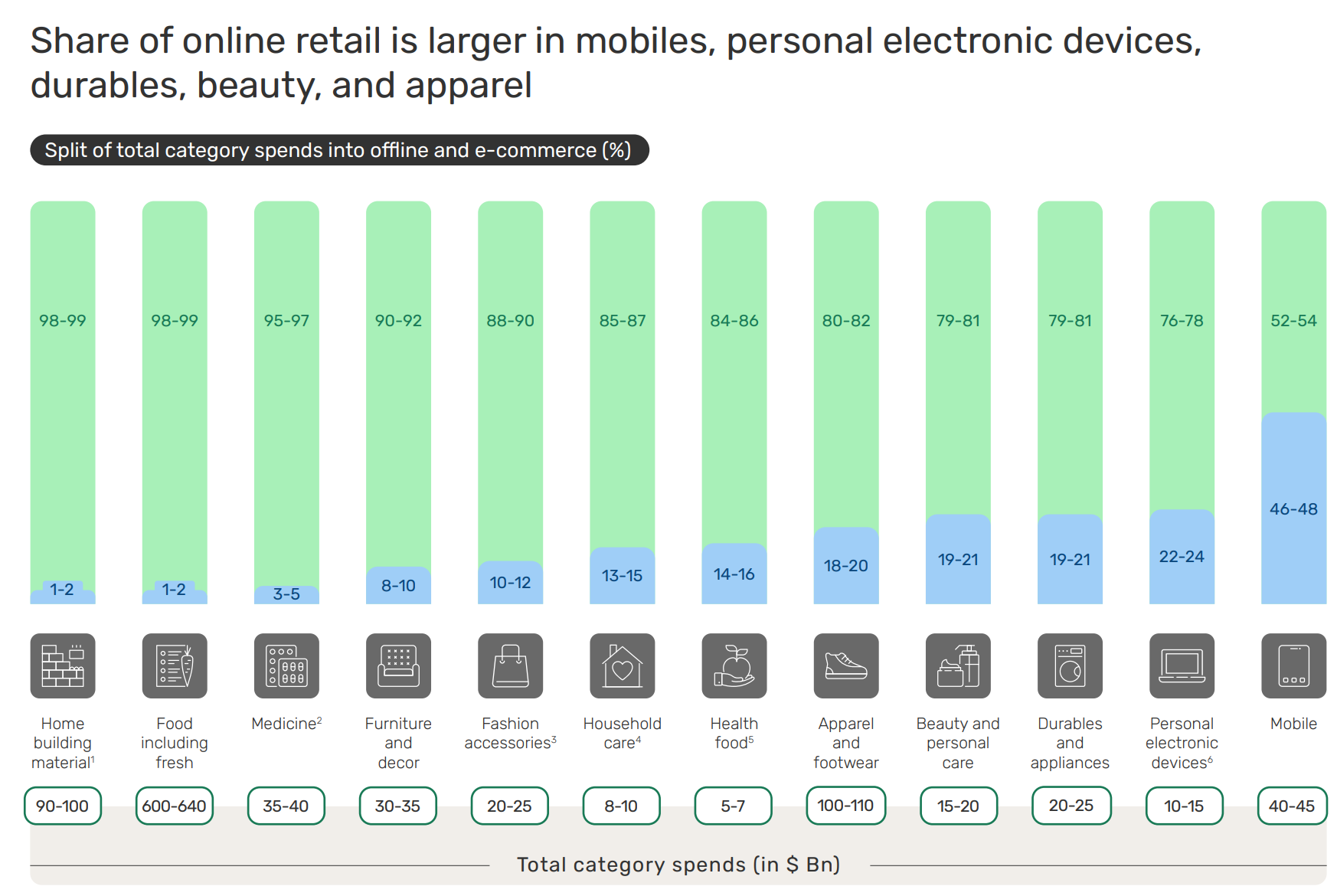
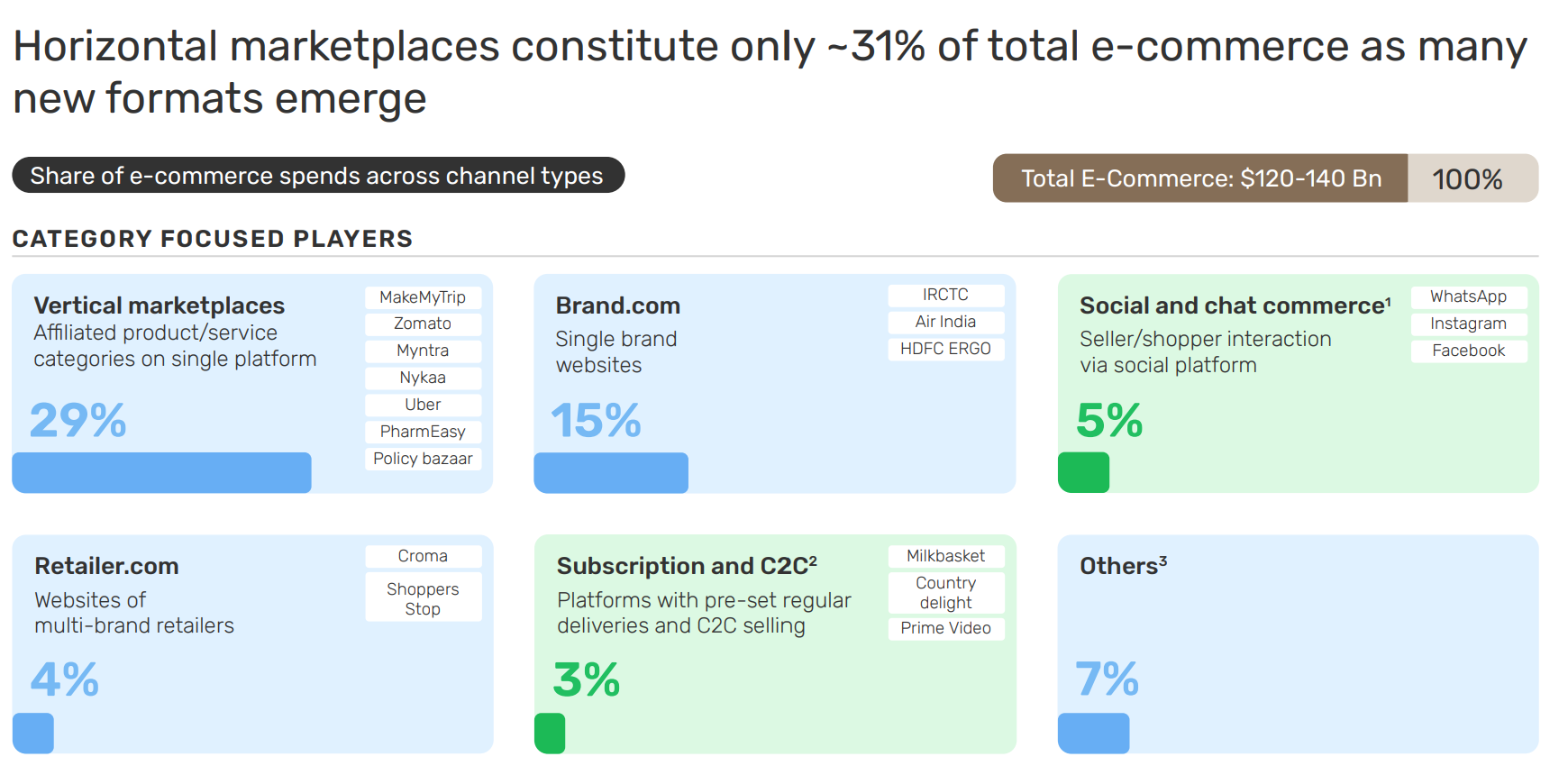
Saving the best one for last! BCG’s connected commerce report is a must-read and deserves a separate post. Tons of insights like:
Currently at $120-140 Bn, e-commerce is estimated to reach $280-300 Bn by 2030; will still be at 7-8% of total consumer spends
Quick commerce is growing at 100%+ CAGR (2021-25), particularly skewed towards younger cohorts and women

PS: Folks at some companies have told us this newsletter is almost mandatory weekly reading for their teams 🥰. If your company is not in on it yet, get your teams on the latest in the e-commerce space every week.