
🚦Time For Vertical Marketplaces?
Funding Time for Kisah, Healthfab, Chosen and Vedix
Somewhere between Iran and Oman, a narrow strip of water is deciding what it costs to deliver your next order. The Hormuz blockade pushed oil up, freight up, and inflation up - in that order. India, which routes most of its Gulf crude through that corridor, is absorbing the hit in real time.
Rising fuel means rising freight, rising packaging costs, and rising COGS for every D2C brand. Nobody in the industry is talking about it loudly. Everybody is feeling it quietly.

Indian ecommerce has always had a special talent for ignoring macro chaos. This week was no exception. Normal service, abnormal backdrop. Let’s get into it. 👇
🗞️Marketplace Buzz
Swiggy put up exactly the numbers an investor wants to see in a single quarter: revenue up 44.7% to ₹6,383 Cr, losses down 26% to ₹800 Cr, and quick commerce growing 53% as the newest engine finds its pace. Scroll to the full year and the picture shifts: FY26 revenue grew 51% but annual losses widened 33% to ₹4,154 Cr. Net net, good quarter, but the growth is still more expensive annually than the topline improvement can absorb.
Zepto picked up SEBI approval for a $1B listing just five years after founding, and the quick commerce category is why the clock moved this fast. Traditional startups spend a decade building toward IPO readiness; QC compressed that proof into daily orders, and Zepto crossed 2.5 million a day while still a toddler at just five years. The IPO timeline moved when the category proved it didn’t need a decade to matter.
BazaarNow closing ₹72.3 Cr at a ₹270 Cr valuation four months into operations in select Bengaluru areas tells you what is being funded in quick commerce right now. The 6.75x seed-to-Series A jump is a full-price bet on founders who ran category operations at Zepto before launching BazaarNow. The category is winner-take-most, and being backed early on founder credibility alone is a high-variance position.
📊Infographica
🍕D2C Snippets
Libas’ launch of Gerua at ₹499 with AI-generated imagery and 60–70% of marketing budget going to nano and micro-influencers is a very deliberate CAC playbook for a low-AOV brand, dressed up in Gen Z vocabulary. In a price range that starts at ₹499, acquisition math is everything. First-salary buyers have thin wallets and long careers ahead. Whoever owns that first wardrobe decision earns the right to sell the upgrade for the next decade.
CHOSEN’s $5 Mn raise is funding a retention engine built on a 2,000-clinic prescription network where 70% of customers repeat, and D2C sales flow almost entirely through its own platform. When a dermatologist prescribes your SKU, the patient self-renews across months, and the platform captures those reorders without re-acquisition. CHOSEN built its brand on that insight and now has the capital to scale what is already compounding.
Kisah’s ₹35.9 Cr Series A has a number underneath it that matters more: ₹41.8 Cr in FY25 revenue, 65% year-on-year growth, and ₹2 Cr in profit. Men’s and kids’ ethnic wear put Kisah in a quieter lane, away from the overcrowded women’s segment where CAC eats margins. The raise gives Kisah capital to scale from a profitable base, and that is how D2C is supposed to work.
HealthFab’s ₹20 Cr raise funds period care expansion on paper, but adding energy, sleep, and pain management to the roadmap signals a women’s wellness platform play, not just category deepening. GoPadFree earned 5 lakh women who chose the harder reusable option in a category where most still default to disposables. One brand serving a woman’s full wellness cycle is the retention model most D2C companies seldom manage to build.
Vedix’s ₹321 Cr deal closes a gap Emami’s BPC portfolio could not fill through distribution alone, because personalised Ayurveda backed by lifestyle data requires years of product iteration and consumer trust before it compounds. The performance-linked structure over 24 months confirms Emami is buying a model it still needs to understand. Legacy BPC brands that spent the decade on reach are now paying acquisition price for the customisation they skipped.
📢Power Talk
“(We) are focussed on strengthening entrepreneur and supplier capabilities, raising compliance and quality standards, and helping scale manufacturing so more Indian businesses are ready to export,” - John Furner, CEO, Walmart
📚Reads and Recommendations
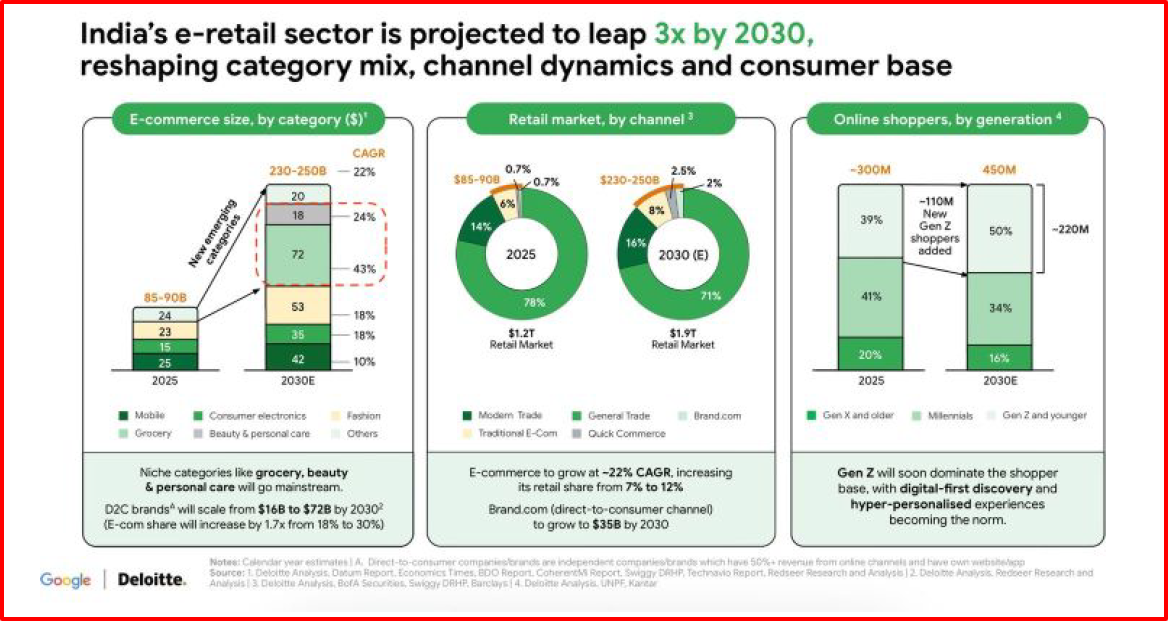
Flipkart’s HISO 2026 report frames Gen Z as India’s next e-retail wave while its own data shows they’re already 40%+ of shoppers and driving roughly half of all incremental orders. The “next wave” label is a brief written for brands still planning around a consumer who has already arrived.
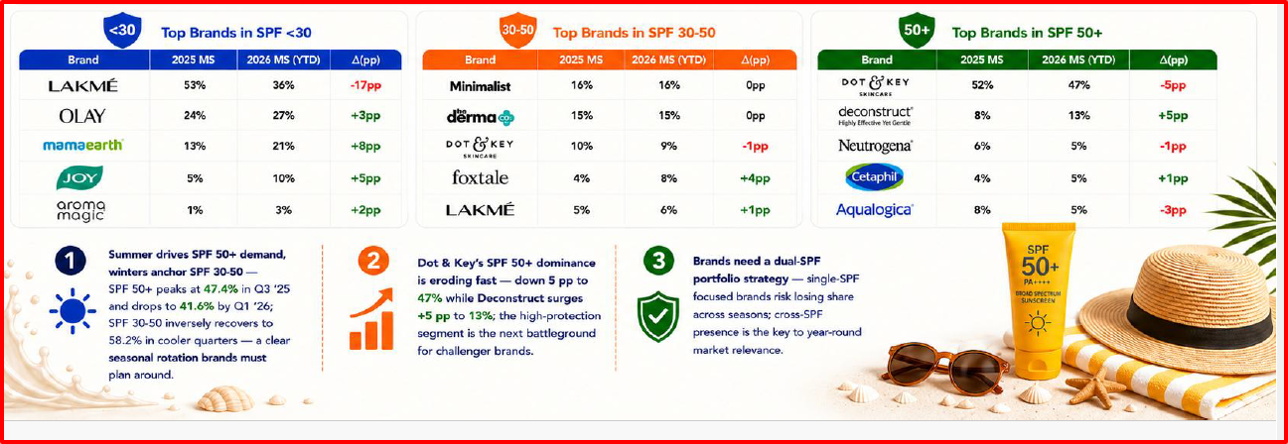
India’s sunscreen category on quick commerce just posted a Q1 that outran last year’s peak summer quarter, which means the “stock for summer” planning cycle has officially retired itself. 1DigitalStack’s category data tracks the 2.7X year-on-year surge, with Tier 2 and Tier 3 cities now driving over 40% of volume. Brands still building seasonal inventory curves are chasing a market that already moved past them.
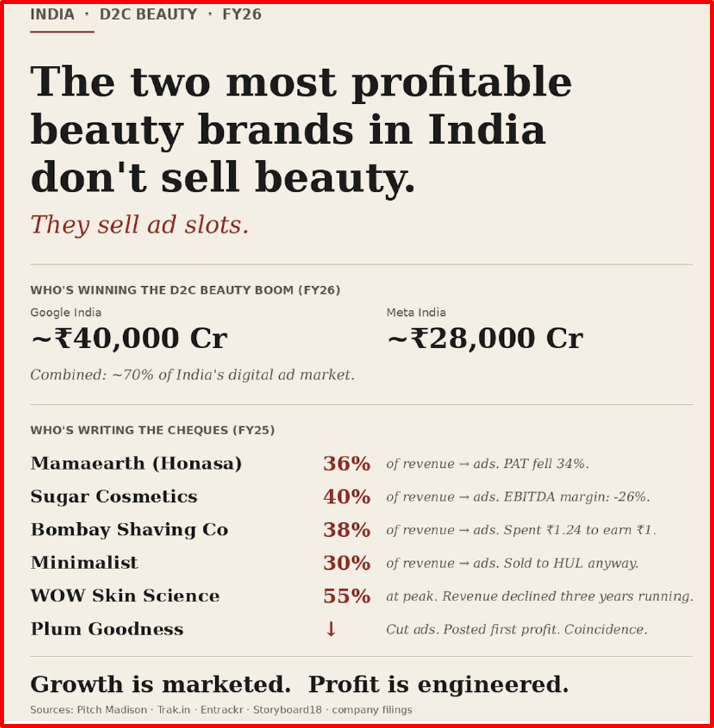
India’s D2C beauty brands treated Google and Meta as performance channels, and a brand-level analysis of D2C beauty ad economics identifies the structural problem: 800+ brands funding two platforms that have no interest in lowering their price. Meta CPMs rose 40-60% since 2023; Mamaearth’s PAT fell ; Bombay Shaving spent ₹1.24 to earn ₹1. Plum cut spend and clocked their first profit. That is the only outcome when the auction isn’t yours.
Quick commerce is taking grocery share from kirana and traditional trade; in BPC, the displacement runs from online platforms and modern trade. The Google and Deloitte ‘$250B Commerce Frontier’ report puts BPC at 9-13% QC share by 2030 as non-food expands from 15% to nearly half of Qcomm GMV. The routes are structurally different. Brands managing both with a single QC channel strategy are leaving one category’s competitive response unbuilt.
The world's largest online retailer just turned weight-loss medication into an impulse-friendly, same-day SKU. Amazon Pharmacy is now stocking Ozempic pills at its One Medical kiosks and offering same-day delivery across 3,000 US cities. The pill version skips refrigeration, making it kiosk-friendly unlike the injectable.
The heat outside is unrelenting. While you plan an absolutely smashing week, don’t forget to hydrate yourself.
Every founder, operator, and investor who reads this starts Monday with an unfair advantage. Just saying.
Join the 3500+ weekly readers, if this was forwarded to you by a team member.